Designer Prabal Gurung celebrated the feminist movement on the ramp.
In India, 60 per cent said they think they have the skills needed for their careers
He said the US believes that when nations respect the rights of their neighbours and defend the interests of their people, they can better work together to secure the blessings of safety, prosperity and peace.

Jaishankar criticised the UNHRC for its criticism on the situation in Jammu and Kashmir,

'Without it, it is going to be much, much, much, much worse.' 'In the meantime, we really need to work on a sort of war footing, given that it is a natural disaster, provide relief, provide essentials, till we get biological herd immunity, we need to get economic immunity, and also social immunity.'
India needs to consider whether the Donald Trump administration can actually deliver, observes former foreign secretary Shyam Saran.
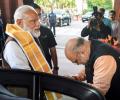
While it took the Congress nearly a half century to earn the hatred of other political outfits, the BJP appears set to reach there in around six years, says Arun Bhatnagar, former secretary to the GoI.

'The army is using its might to teach them a lesson'

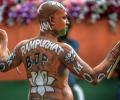
'One goal of the Congress would surely have been to rebuild its organisation so that it begins to match that of the BJP.' 'However, this has not happened, though Rahul Gandhi has been in the party for 15 years now,' says Aakar Patel.
.jpg)
India was among the 11 countries that abstained from voting on the resolution in the UN Economic and Social Council.

Prime Minister Narendra Modi has said India has a chance to rise again as a global economic power and suggested that it could match with China and he has a "clear roadmap" to channelise entrepreneurial capabilities of country's 1.25 billion people.
Dr Talat Ahmad, vice chancellor of Jamia Milia Islamia suggests important reforms in the Indian education system.

'If prices of everyday consumption don't come down, employment doesn't pick up, 2020 will not be a happy year for anyone but the super rich,' notes Sherna Gandhy.
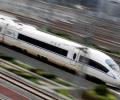
Questioning the bullet train in view of the investment needed in Indian Railways is similar to saying that India needed to invest in primary education rather than in IITs, says Shreekant Sambrani.
'India's reputation is not and cannot be dependent on the whimsical opinions of some obscure foreign advisory committee packed with Hindu-phobic acolytes,' declares Vivek Gumaste.

The South-East Asian country is a growing market for sponsors such as brewer Heineken and will give the region four races on the calendar again after the departure of Malaysia last year.

'You can only see it when you look for it. Seek and you shall find.'

At the summit, India signed the SCO's memorandum of obligations, kick-starting the process of its accession into the group as a full member.

Democracy is a necessary but not a sufficient condition for rooting out corruption

'What will this supposedly more business-friendly government do if it gets a second term?' 'Important labour law and land reforms remain off the table.' 'Witness the arm-twisting of foreign players in e-commerce and all but one player in telecom -- and it is very hard to justify this perception that the BJP is business friendly.' 'There will also remain the real risk of ideas seemingly gleaned from the pages of Amar Chitra Katha, overlaid with PowerPoint presentations,' predicts Rahul Jacob.

Gao Yu was found her guilty of leaking an internal Communist Party document to a foreign website.
An inevitable consequences of advanced and rich economy is a fatter population, says a health economist and co-author of a new book, 'The Fattening America'.

Unidentified persons on Wednesday created a ruckus at the South Mumbai office of former Mumbai sheriff Nana Chudasama, to protest his 'anti-Marathi' banner.

These 12 photographs show what a mad, mad world we live in!

'We always say "Beti Bachao" and "Beti Padhao", but there has to be "Beto ko padhao aur na samjhe toh thappad lagao".'

Thackeray would be taking over as chief minister more than a month after results of the Maharashtra Assembly elections were declared on October 24.

Modi had on Friday urged people to turn off lights at their homes for nine minutes at 9pm to display the country's collective resolve and solidarity to defeat the virus.
'It is because we treat them as our own people, and there is no difference between owners and workers here.'
Seeking an expansion of the UN Security Council, he said India, Japan and Germany should be included in the Security Council as permanent members but without veto power.

'Right now there are two battles, the one in our heads about the pandemic and 2, the actual pandemic itself.'

According to leaders of these economies who were speaking at a session at the 44th World Economic Forum Annual Meeting in Davos, the BRICS economies would rebound over the next few years, despite having been hit to varying degrees by fallout from the global financial crisis.
'Others will think twice before attacking our space assets.'

'The Himalayan people may not represent a large or politically influential section of the population, but India's security depends on them.' 'Let us hope Sikkim remains a beacon of stability,' says Claude Arpi after a recent visit to the picturesque north eastern state.
'What his minions do, we are not sure, but he has got to keep them under control. Pogroms against Muslims in India -- I don't think that is going to be his policy.'

Prime Minister Narendra Modi was on Friday named 'Asian of the Year' by a leading Singaporean press group for being focused on India's development and getting the world "excited" about the prospects of the country again.

'ISRO facilities are very expensive and any damage caused by these start-ups can create havoc to our space programme.'
Investors expect more investment-friendly policies opening up more sectors for foreign direct investment
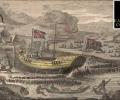
'Facebook and Google no longer need to have infantry regiments and cavalry like the East India Company because they are inside everyone's phones listening to our conversations.'

'It was the Mughals who first established standard units of measurement and maintained offices of meticulous record keepers and auditors, departing from the more haphazard methods of earlier regimes.' 'By the end of the 16th century, their revenue and judicial administrations exhibited an obsessive preoccupation with order, the efficient management of time, and a spirit of rational self-control -- all of them characteristics of early modernity,' point out Sheldon Pollock and Benjamin Ellman.
 © 2026 Rediff.com - Advertise with us - Disclaimer - Privacy Policy - Sitemap - Feedback - About us - Terms of use - Grievances